Top Affiliate Marketing Plugins Every WordPress Site Needs
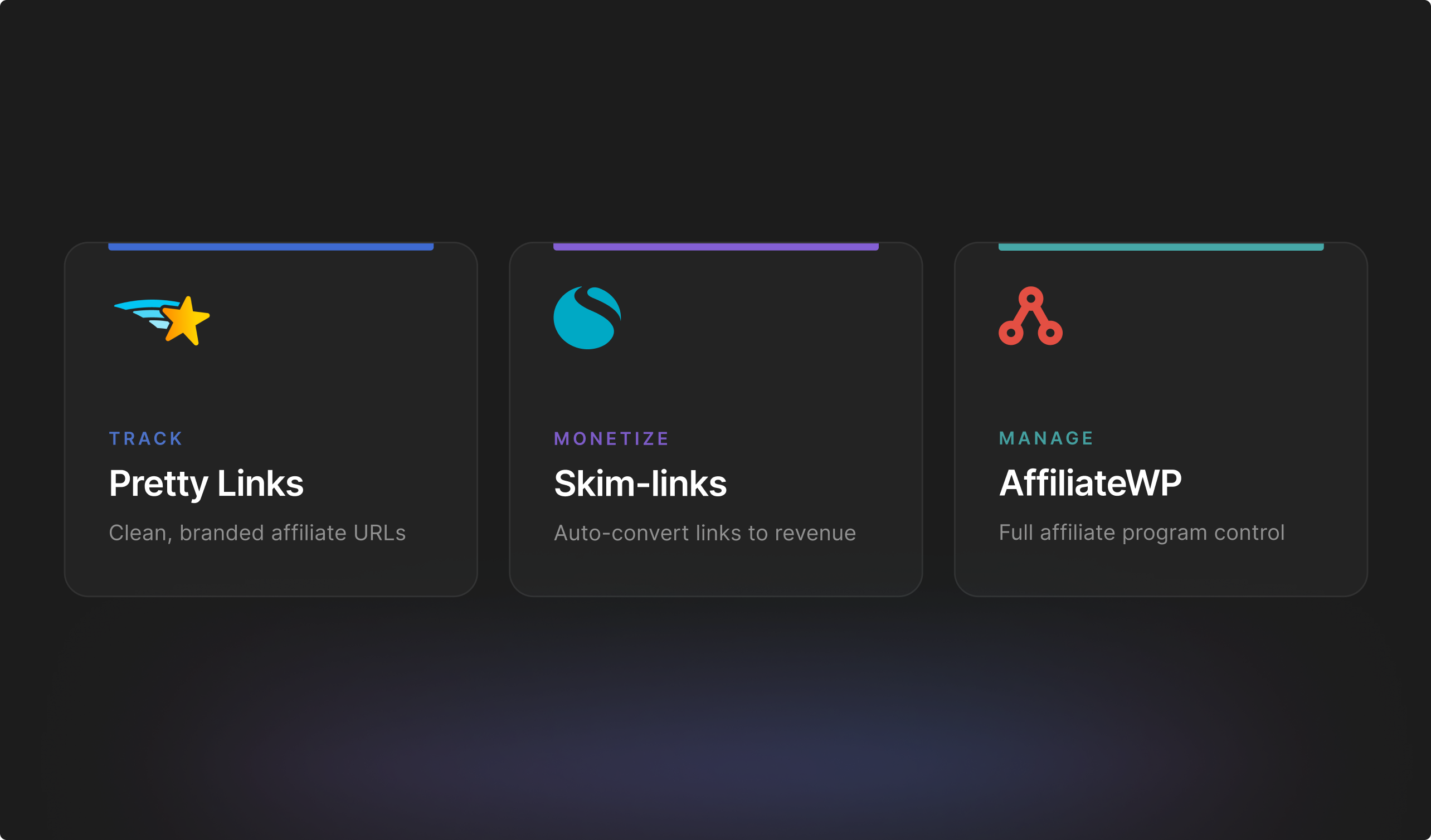
Here are three WordPress plugins that consistently show up in affiliate workflows.
Most affiliate sites start simple. A few articles, some links, basic tracking. As traffic grows, things get more complex — links break, performance becomes harder to track, and scaling turns into manual work.
Plugins help bring structure into that process. They take care of link management, monetization, and partner tracking, so the focus stays on traffic and content.
Here are three WordPress plugins that consistently show up in affiliate workflows.
Pretty Links
Pretty Links focuses on one thing: making affiliate links manageable. It lets you turn long, complex URLs into clean, branded links that sit naturally inside your content. Instead of exposing tracking-heavy links, you create short paths that are easier to place, track, and update.
Key advantages:
- Centralized link management inside WordPress
- Click tracking and performance data
- Easy updates — change destination once, apply everywhere
- Clean URLs that work better in content and social
Where it fits: content-heavy sites, SEO pages, email campaigns, or any setup where links are reused across multiple pages.
Skimlinks
Skimlinks handles monetization automatically. The plugin converts regular product or merchant links into affiliate links in the background. There’s no need to join individual programs or manually manage tracking parameters. Content becomes monetized as it’s published.
Key advantages:
- Automatic link monetization
- Access to a large network of merchants
- No need to manage individual affiliate programs
- Works well for large content libraries
Where it fits: blogs, media platforms, or publishers with a high volume of pages where manual linking slows things down.
AffiliateWP
AffiliateWP is built for teams that want to run their own affiliate program. It gives full control over partner onboarding, tracking, commissions, and payouts directly inside WordPress. Everything stays within your own system, which makes it easier to scale and adjust terms when needed.
Key advantages:
- Full control over your affiliate program
- Built-in tracking and reporting
- Simple partner onboarding
- Integrations with WooCommerce and other tools
Where it fits: SaaS products, e-commerce stores, or services building their own partner ecosystem.
Final thoughts
Each plugin solves a specific bottleneck: managing links, monetizing content, or running your own program. The right setup depends on how your site operates. Content-heavy sites benefit from automation, while product-focused setups need control over partners and payouts.
As traffic grows, these tools start influencing results more directly — especially on consistency and scalability.